Networking Events That Really Work: Why Curated Matchmaking Outperforms Random Mixes
Most networking events make a costly mistake: handing you a badge and assuming the rest will take care of itself.
Networking Events That Really Work: Why Curated Matchmaking Outperforms Random Mixes
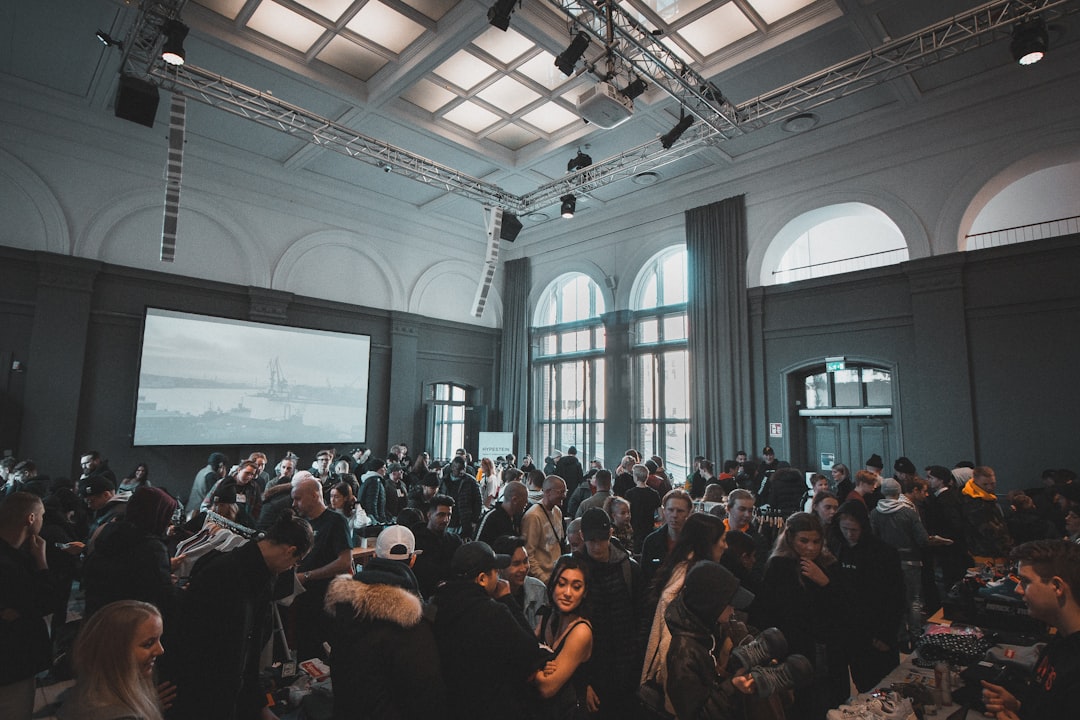
Most networking events make a costly mistake: handing you a badge and assuming the rest will take care of itself. Enter a classic mixer and you'll see the same scene — small groups of people who already know each other, founders cornered by service providers, investors receiving the same pitches they've heard a thousand times. The room is full. Real connections are rare.
This is the gap that curated matchmaking fills. Instead of leaving introductions to chance, modern networking events use software to pair participants with intention — founder-investor, operator-operator, mentor-creator — based on what each is actually looking for. The result: fewer wasted conversations and more meetings that matter.
This guide explains how curated matchmaking works at networking events, why it systematically outperforms unstructured formats, and what to look for when choosing a platform for your next conference, meetup, or summit.
What "Curated Matchmaking" Really Means at a Networking Event
Curated matchmaking is the practice of using structured data — role, intention, industry, stage, geography, calendar availability — to propose specific 1-to-1 introductions between two participants who would never meet in a room of 500 people.
The mechanisms are surprisingly simple. Each participant fills out a short profile before the event: what they do, what they're looking for, what they can offer. A matching engine compares profiles, evaluates compatibility, and displays a ranked list of suggestions. Participants accept, the system schedules a slot, and both parties arrive at a designated table or video call already knowing what the conversation will be about.
What distinguishes curated matchmaking from older event apps is the two-way consent step. A recommendation only turns into a meeting when both parties say yes. No cold approaches, no inbox spam, no awkward ambushes at 9 a.m. near the cafeteria.
Why Random Networking Fails Silently
The "come and chat" model has a measurement problem. Organizers count tickets sold and foot traffic. Participants count business cards collected. None of these numbers say whether real value was exchanged.
Behavioral research on professional events points to a few persistent patterns:
- Homophily bias. People talk to people who look and sound like them, which is the opposite of what most participants say they came looking for.
- Status concentration. About 80% of meaningful introductions at a typical event come from 20% of "super-connectors," leaving everyone else to fend for themselves.
- Decision fatigue. After two hours of small talk, participants ration their energy and stop initiating new conversations — exactly when higher-potential introductions could still happen.
Curated matchmaking doesn't eliminate these forces, but it neutralizes them. The matching engine bypasses homophily by deliberately pairing across segments. It distributes introductions evenly instead of clustering them on the most visible participants. And by scheduling slots in advance, it removes the same-day decision cost that exhausts most networkers by afternoon.
A Side-by-Side Comparison
The differences become concrete once you put the two formats next to each other.
| Dimension | Unstructured Mixer | Curated Matchmaking |
|---|---|---|
| How introductions happen | Self-initiated, ad hoc | Algorithmic suggestion + mutual acceptance |
| Coverage | Heavy clustering around connectors | Even distribution across participants |
| Conversation quality | Generic "what do you do?" loop | Pre-shared context, clear intention |
| Follow-up rate | 10-20% of cards lead to a second contact | 50-70% of mutual matches schedule a next step |
| Organizer metric | Tickets sold, foot traffic | Confirmed meetings, satisfaction NPS |
| Participant metric | Cards collected | Booked meetings, accepted introductions |
The numbers vary by event format, but the directional gap is consistent in venues that have deployed structured matchmaking.
What "Works Well" in 2026
A few markers distinguish a serious curated matchmaking deployment from a sophisticated spreadsheet.
Profile depth. A good system asks five to ten meaningful questions about role, stage, industry, and intention. Too few and the matches are noisy; too many and participants bail before completing the form.
Two-way consent. Each party can decline a recommendation without explanation. The system learns from declines and stops proposing similar pairs.
Calendar integration. Scheduling happens inside the platform, not in a separate email thread. A meeting on the integrated calendar is when value is created.
Search Console quality analytics. Organizers need to see live dashboards: percentage of participants with completed profiles, meetings booked, no-show rates, satisfaction by segment. Without this, the platform is invisible to those funding it.
Multilingual support. Cross-border conferences need at minimum English, Spanish, French, German, and a regional language. Automatically translated profiles let participants match across language barriers without losing nuance.
How Community Network Powers Curated Matchmaking
Community Network is built around a unique bet: that most professional value at an event comes from a small number of highly tailored 1-to-1 conversations, not from the volume of weak ties collected at the bar.
The platform has now powered more than 5,000 curated meetings across summits, founder weeks, and sector roundtables. The recipe is the same every time. Participants sign up with a short structured profile. A scoring engine ranks every other participant against their stated intention. Both parties confirm before a meeting is scheduled, and post-meeting NPS feeds the model.
Organizers get a real-time dashboard with the metrics that actually predict event ROI — match acceptance rates, meeting realization rates, satisfaction at the segment level. Participants get a calendar filled with conversations they opted into.
The result is an entirely different type of event. Instead of a hallway full of strangers in circulation, you get rooms full of focused pairs. The hallway track doesn't disappear — it becomes sharper, because random conversations are now primed by a real introduction earlier in the day.
How to Integrate Curated Matchmaking into Your Next Event
You don't need to rethink the entire agenda. A gradual rollout tends to work better than a radical overhaul.
- Pick a slot. Book a 90-minute block in the agenda and mark it as curated meeting hour. Treat it as an experiment, not a replacement for the main program.
- Sign up early. Send the profile form two weeks before the event. Participants who complete it before the event match much better than those who fill it out at check-in.
- Limit meetings. Six to eight 15-minute slots per participant is the sweet spot. Beyond that, quality collapses.
- Measure honestly. Track confirmed meetings, realization rate, and post-meeting satisfaction. Compare against the vanity metric of cards collected from previous events.
- Iterate. The matching engine learns from declines, no-shows, and ratings. By the third event, you'll see better fit at the top of each participant's queue.
A useful rule: if even ten percent of participants leave with a high-value meeting they wouldn't have had otherwise, the event has paid for itself in goodwill.
Frequently Asked Questions
Is curated matchmaking only for large conferences?
No. The model works just as well for a fifty-person founder dinner as a three-thousand-person summit. The smaller the event, the higher the proportion of participants who engage, which improves overall match quality.
Do participants actually use it?
At well-integrated events, realization rates sit between 60 and 80%. The biggest predictor of usage is whether the organizer presents the platform as the main networking surface of the event, not as an optional add-on.
What about privacy?
Profiles are only visible to other registered participants, and the matching engine never reveals declined recommendations to the other party. A decline is silent.
Can it replace the hallway track?
It complements it. Curated meetings produce the warm introductions that land hallway conversations. The two together outperform either in isolation.
When should participants sign up?
Two weeks before the event is ideal. One week is acceptable. Same-day registration produces noticeably weaker matches because the matching engine hasn't had time to learn from declines and refine recommendations.
The Bottom Line
Networking events have spent a decade competing on speaker quality and venue prestige. The next decade will be won by whether participants actually leave with the meetings they came looking for. Curated matchmaking is the cheapest and fastest way to deliver on that promise. The platforms exist, the data is there, and the gap between events that adopt it and those that don't is widening rapidly.
For a deeper analysis of how the same principles apply to recurring meetups, check out our guide to fixing the broken meetup format. For event organizers looking to integrate matchmaking into their own program, the organizer's guide to event matchmaking software explains the rollout step by step.